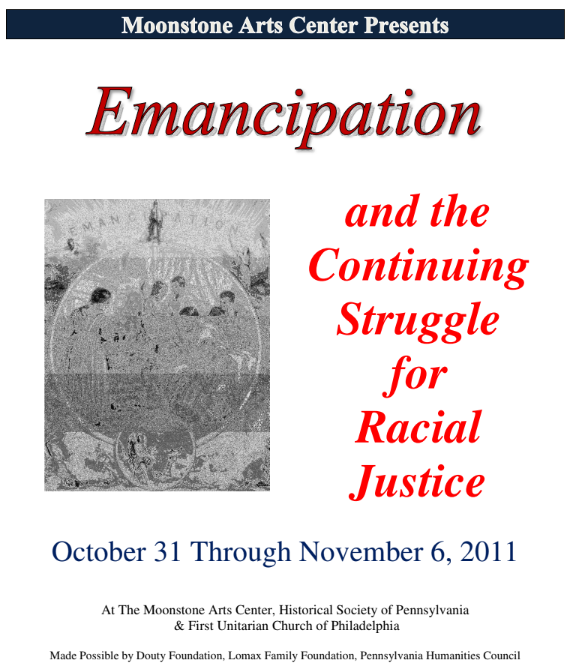
The 4th edition of the Hidden History Project focused on different acts of emancipation and the push that led to the Emancipation Proclamation on January 1st, 1863. Among those highlighted was noted general, explorer and senator John C. Fermont. The week-long festival was held around the 150th anniversary of the firing of John C. Fremont after he issued his own emancipation edict that freed slaves in Missouri. The history of emancipation was chosen for the 4th edition of the project because it has often been oversimplified in how our nations history has been told.
Festival Highlights
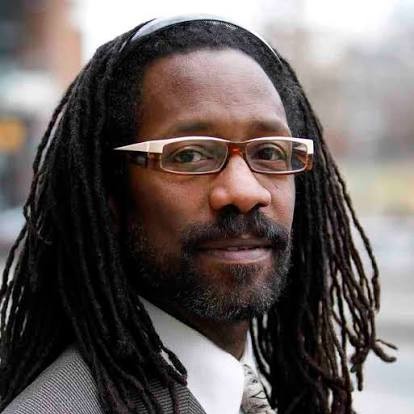
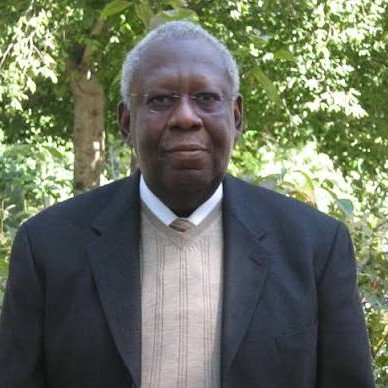
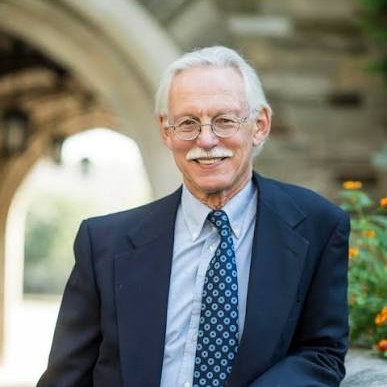
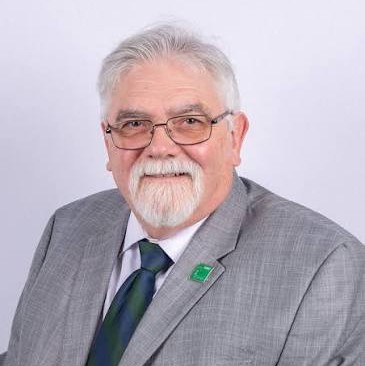
The week-long festival lasted from October 31st- November 6th, 2011. The events began with a panel discussion at Moonstone Arts Center called The Continuing Struggle for Racial Justice in Philadelphia featuring Michael Coard, James Mueller, and Larry Robin. Following was a special service at First Unitarian Church of Philadelphia that focused on Emancipation and the Continuing struggle for Racial Justice. The festival is capped off with a panel discussion at the Historical Society of Pennsylvania featuring Michael Coard, Robert F. Engs, Randall M. Miller, and Jamers Mueller. This discussion focused on the history of the anti-slavery movement, on emancipation and self-emancipation, and the struggle for racial justice in Philadelphia both in history and at the time.
Michael Coard
Robert F. Engs
Randall M. Miller
James Mueller
History of Emancipation
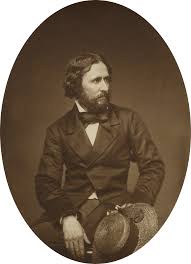
One of the first, emancipation edicts was made by John C. Fermont. John C. Fermont was born on January 21, 1813. He was an explorer of the American West, a US Senator (1850-1851), the first Republican presidential nominee (1851), Union general, and Radical Democracy presidential nominee (1864). During the onset of the Civil War in 1861, John C. Fermont was assigned command of the Department of the West as a Major General by President Abraham Lincoln. On August 30th, 1861 without President Lincoln’s knowledge Fremont issued an emancipation edict declaring all slaves in the State of Missouri whose owners had not sworn loyalty to the Union free. Upon hearing of the decree, Lincoln requested Fremont rescind the order. When Fremont refused, Lincoln nullified the order himself and fired Fremont 52 days later. Fermont continued into a career in politics before his death on January 13th, 1890.
Fremont was not the only one to unofficially issue an emancipation edict. General David Hunter was the Union Commander of the Department of the South. On May 9th, 1862 he passed his own decree declaring slaves in Florida, Georgia, and South Carolina were free. Within 10 days President Linclon struck down the order saying the general exceeded his authority.
At this point the pressure leading to emancipation was rising on all levels, Self emancipation through the underground railroad, General Fremont and Hunter’s actions, and public pressure lead to President Liclon officially passing the Emancipation Proclamation on January 1st 1863. This was not the end of the fight for emancipation but rather a tipping point in the struggle to live up to the promises America was founded on.