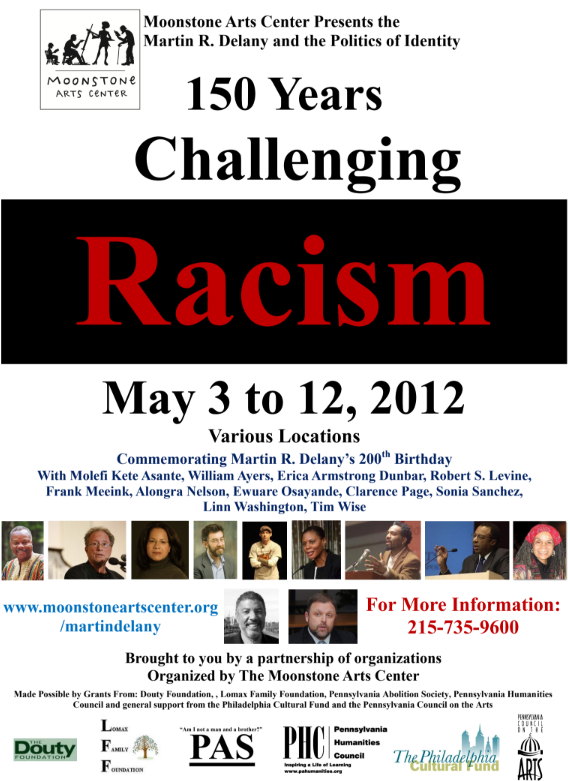
The fifth edition of the Hidden History Project was centered around Martin R. Delany. The project was titled 150 Years Challenging Racism and commemorated the 200th birthday of Martin R. Delany. This was the largest edition of the Hidden History project to date, pushing the boundaries on what is possible with programs such as these. This festival generated the most media attention of the project to date, grabbing the attention of local news outlets such as CBS Philadelphia, Philadelphia Tribune, Philadelphia Inquirer, and WHYY.
Festival Highlights
This city-wide festival lasted for 9 days, from May 3-12, 2012. The festival featured 11 different speakers and 20 events held around Philadelphia. The speakers included prominent historians, poets, and journalists. The event kicked off with a discussion at the School District of Philadelphia auditorium titled Race in America featuring Erica Armstrong Dunbar, Clarence Page, and Linn Washington J,
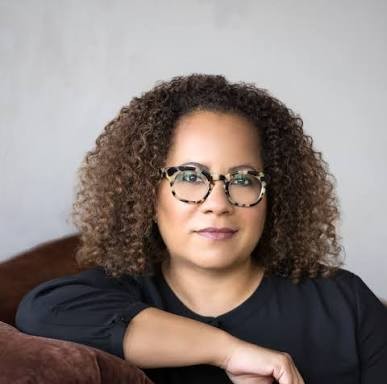
Erica Armstrong Dunbar
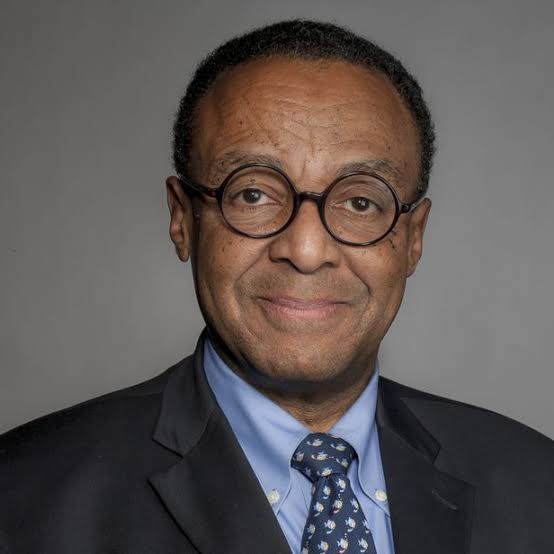
Clarence Page
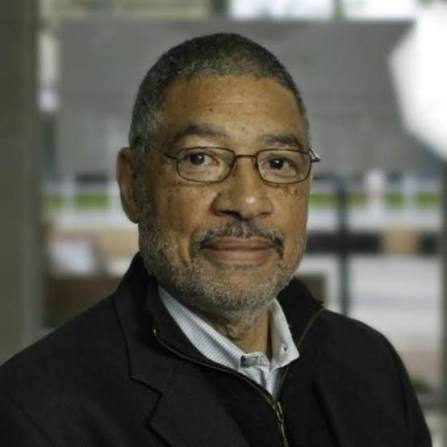
Linn Washington Jr.
An Evening with Tim Wise, an anti-racism talk by Tim Wise at Hospital Workers Union Headquarters, A screening of film The Myth of Race – a Mennonite Central Committee Production and talk by Ewuare X. Osayande,
Tim Wise
Ewuare X. Osayande
A discussion on the poetry of identity at Moonstone Arts Center titled Who Am I? Who are You? Featuring Sonia Sanchez, Lamont Steptoe, Hancock Guy, and Daniel Abdah-Hayy Moore,
Sonia Sanchez
Lamont Steptoe
Hancock Guy
Daniel Abdah-Hayy Moore
A talk by Dr. Molefi Kete Asante titles Martin R. Delany & the Birth of Black Nationalism at Samuel L. Paley Library, A program presented at Moonstone Arts Center titled Challenging Racism for 150 years presented by Robert S. Levine and Frank Meeink
Robert S. Levine
Frank Meeink
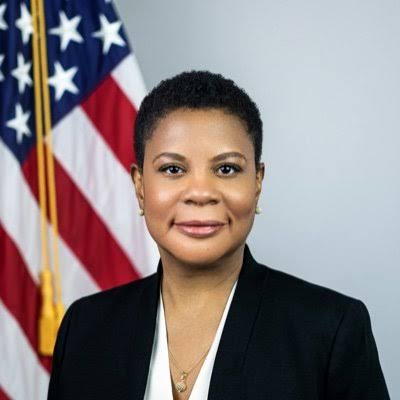
The featured panel discussion for this year was titled Martin R. Delany & the Politics of Identity at the Historical Society of Pennsylvania featuring distinguished scolars Molefi Kete Asante, William Ayers, and Alondra Nelson.
Molefi Kete Asante
William Ayers
Alondra Nelson
Events were held at Moonstone Arts Center, Local Philadelphia High Schools, Mother Bethel A.M.E church, First Unitarian Church of Philadelphia, African American Museum in Philadelphia, and William Way Community Center. This was the largest and most successful festival to date, generating community engagement, media coverage, and interest around Philadelphia.
Festival impact
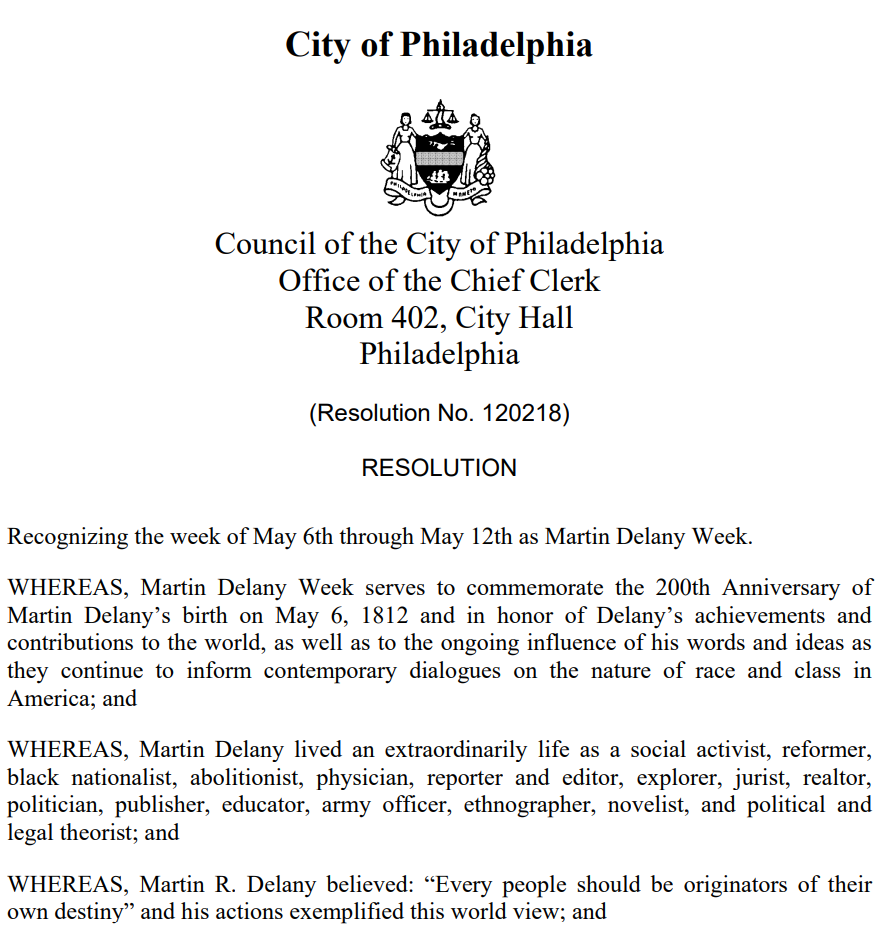
Unlike some of the previous projects, this was picked up by the local news outlets in the Philadelphia area. This helped spread awareness for the festival, Martin R. Delany’s story, and his impact on America. This festival also led to the Philadelphia City council passing resolution #120218 on May 15th, two days after the festival concluded. This resolution officially declares the week of May 6-12th Martin R. Delany Week.
Life of Delany
Martin Robinson Delany was born free in Charlestown Virginia on May 6th 1812. Delany’s interests garnished him many titles over his life. He was an Abolitionist, a black nationalist, a physician, journalist, editor, politician, and army officer over the course of his life, just to name a few.
In his early life, Delany was forced to move to Western Pennsylvania when his mother was threatened for teaching him how to read and write. Eventually they settled in Pittsburgh where Delany studied under local black leaders. In the 1830s and 1840s Delany attended and organized black conventions in the region while apprenticing as a doctor. In 1843 Delany founded one of the first African Americans newspapers, Mystery where he worked for several years before joining Fredric Douglass to co-edit the North Star. Philosophical differences divided Douglass and Delany and eventually he left the North Star to attend Harvard Medical School. The school faced intense public backlash for admitting Delany and other Black students and eventually dismissed them from the school.
Unlike Fredric Douglass, Martin R. Delany believed in emigration, the idea that African Americans should leave America and return back to Africa. He published a book in 1852, The Condition, Elevation, Emigration and Destiny of the Colored People of the United States Which argued for emigration and outlined America’s Failure to extend citizenship to African Americans.
To realize his vision of emigration to Africa, Delany traveled to West Africa in 1859 and signed a treaty with the ruler of Abeokuta. This provided the land to create a settlement for African Americans leaving the states.
In 1861, the plan eventually deteriorated as the civil war erupted in the United States. Delany helped recruit thousands of African American troops for the newly formed United States Colored Troops (USCT). President Abraham Lincoln promoted Delany the rank of major, the highest military rank of any African American during the Civil War. Delany became the first Black man to become a field officer in the Union Army.
In the late 1870s, Delany helped reconstruction efforts in the late confederacy stronghold of South Carolina. Here his political career continued. He ran for lieutenant governor of South Carolina in 1874 but ultimately lost the race. Delany was appointed as a judge in Charleston but a scandal involving the church arose and he was removed from his position in 1875. He took a step back to focus on his family until he died on January 24, 1885.
Historical Significance
Martin R. Delaney’s fierce unapologetic Black pride made him one of the most impactful Black figures of the century. Delany Started one of the first African American led newspapers, Mystery and worked on North Star, the most influential black newspaper of the time. Delany was of the first 3 American Americans to be admitted to Harvard Medical School. Delany became the first African American field officer and achieved the rank of Major, the highest of any African American during the Civil War.
Delany was the first to complete many feats. Delany paved the path for achievement in a time where society was built for his suppression. He was a force to be reckoned with, guided by an unmoving sense of identity. In the words of historian Robert S. Levine, “The extraordinary persistence and creativity of his efforts to bring about social change make him one of the most fascinating African American leaders and writers of the nineteenth century and arguably one of the three or four most influential.” Excerpt from The Martin Delany Reader